Try to describe darkness without using the word light. You can’t. The only way to describe darkness is as the absence of light.
Sometimes the best way to understand something is through what it’s not.
The best way to understand emotional intelligence, then, is through its opposite. And its opposite is inner anarchy.
What Anarchy Actually Means
Anarchy is a political term. It describes the absence of a central authority, the absence of leadership. And history shows, repeatedly, what happens when that central authority disappears.
When the French Revolution dismantled the monarchy before any new order was established, chaos followed. When powerful leaders have fallen throughout history, the pattern is the same: different factions emerge, each convinced that their way is the only right way, each fighting to take control. It continues until someone with the authority to lead all the factions steps in and restores order.
With anarchy, there are always two problems.
The first is that the different factions fight each other, each convinced they are right. The second is that each faction believes only they have the right to rule, so they keep attempting to take over entirely.
Neither problem resolves until there is real leadership at the center.
The Same Thing Happens Inside You
Our minds are not singular. Inside each of us live multiple parts, each formed in response to a specific experience or need, each trying to help in the only way it knows.
One part learned that staying quiet keeps you safe. Another learned that anger gets results. One part wants connection, another is terrified of being hurt. One wants you to take the risk, another is cataloguing everything that could go wrong.
Each of these parts has its own needs, its own beliefs, its own version of what is best for you. And in many moments, more than one of them is active at the same time, pulling in different directions.
This is not a disorder. It is simply how the mind is structured.
But here is what causes suffering. When there is no inner leader present, those parts do what factions always do in the absence of leadership. They compete. They take turns hijacking the system. One takes over for a while, then another shoves it aside. You find yourself acting in ways you later don’t recognise, saying things you didn’t mean to say, making decisions that don’t reflect who you actually are.
That experience of being run by something inside you rather than running it yourself, that is inner anarchy.
And inner anarchy is simply the absence of emotional intelligence.
The Part That Can See All the Other Parts
Here is the question worth sitting with.
If you can observe your parts, notice them, be aware of them as they surface, then who is doing the observing?
The part that is afraid has a voice. The part that gets defensive has a voice. The part that wants to please everyone has a voice. But something in you can hear all of those voices without being entirely consumed by any of them.
That something is not a part. It is the one who has the parts.
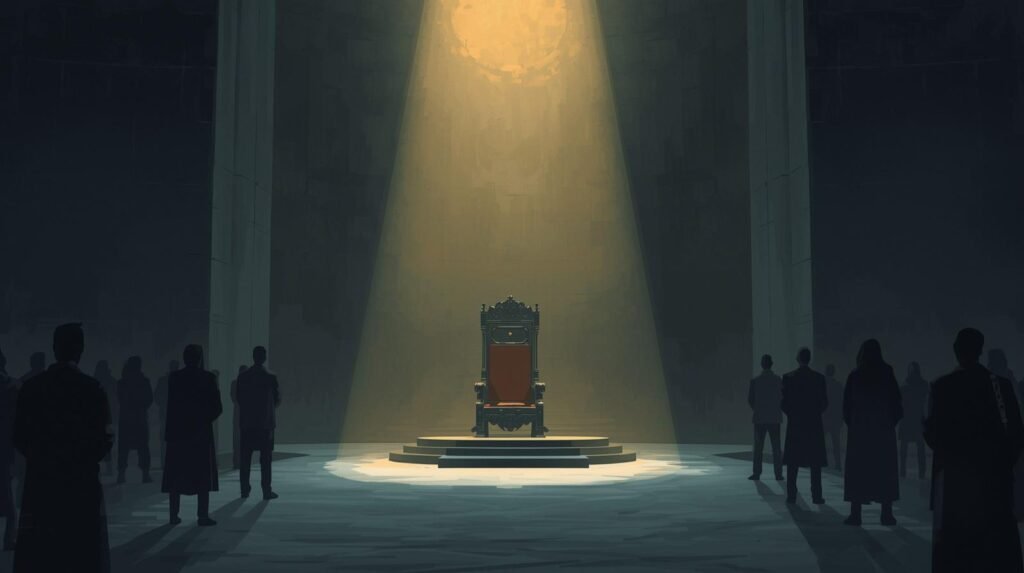
When that presence is available, when it is actually in the room so to speak, the parts don’t disappear. But they settle. They stop fighting for the throne because the real leader is already on it. Emotional intelligence is not something this presence has to manufacture. It becomes the natural order.
A Practice
As you move through your day, pay attention to the moments when you feel pulled in more than one direction at once, when you want to say something and don’t, when you act and immediately wonder why, when you feel two contradictory things at the same time.
In those moments, rather than trying to resolve the conflict or suppress one side, try stepping back just slightly and asking a simple question.
Who is the one noticing all of this?
You don’t need to answer it fully. The question itself creates a small shift in position, from being inside the anarchy to being the one who can see it. And that shift, even briefly, is where the inner leader begins to return.